As a self-confessed technophobe, I like things in life that are relatively simple, because in that way I am not left scratching my head, Googling for advice, or asking what might appear to other people to be stupid questions. Also, I like things to be reliable; things that work when they are supposed to; things that are confidence inspiring.
I will get on to that theme presently, but as a preamble, there is a certain irony in the story I am about to relay to you, which involved a motorcycle accident a few – not that many – years ago, when testing a press fleet bike. I was on a Harley-Davidson Street Glide and had ridden to a pre-planned location for the photoshoot. There, I met up with the photographer and another colleague from a sister magazine, who was aboard a big Indian Chieftain Dark Horse. Photoshoot complete, my colleague and I decided that we would swap bikes for the ride home, as he was heading in my direction anyway. Incidentally, and fortuitously, I was also wearing some product that I had been sent for review, so our photographer had taken some images of that, too.
Five minutes from home and rounding a tight, in fact, blind, left-hand bend, I was confronted by a van. Crash, bang, wallop. I was launched over the handlebars, landed heavily on the Tarmac and rolled along the road. My immediate reaction was to try and lift myself up, but to no avail. The Police closed the road as I lay there, drifting in and out of consciousness, watching puffy white clouds scudding across the sky, whilst waiting for the ambulance crew. At first, it was thought I had suffered a ruptured spleen, but resultant body scans showed that I had merely (!) dislocated and fractured my left thumb and suffered severe bruising to my left thigh. Days later the backs of my legs were black and blue, and it took me weeks of soul searching and confidence building before I could even think about climbing back on board a bike again. The irony? The fact that I was testing new riding product which had been severely put to the test.
I am pleased to report that the helmet and clothing had pretty much saved me from more serious injury. I had been wearing a Shoei Neotec II helmet, now on display on a plinth in the study, and a jacket and trousers from Oxford Products. All as-new before the crash. Both Shoei and Oxford, to their immense credit, sent me replacements as the originals had been destroyed.
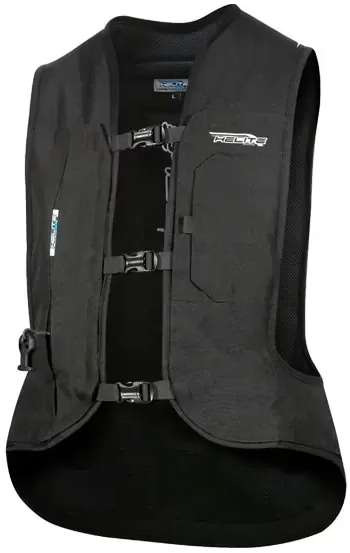
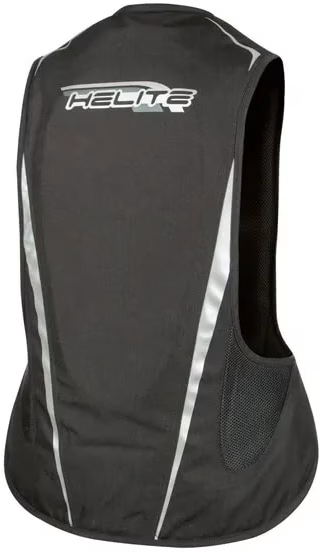
So, preamble over, this leads me somewhat circuitously to the reason for the article. Airbag vests. Thinking about it, I don’t know why I had never considered wearing one before. It was only recently whilst watching a video by a YouTuber I follow who at the time was riding a similar bike to one of mine, a BMW S1000XR, and was waxing lyrical about the benefits of the Helite Turtle 2 Mechanical Air Bag Vest.
Whilst there is no single official count as far as I am aware, I can only ascertain that there are roughly over a dozen major, recognised brands globally that manufacture standalone motorcycle airbag systems, vests, or integrated suits. That market includes a mix of specialised airbag pioneers and major riding gear brands that design or licence their own systems, including Helite with their mechanical tether and electronic e-Turtle systems. As you might expect, both systems have their pros and cons. Simply put, electronic motorcycle airbag systems use internal motion sensors and algorithms to detect a crash wirelessly, whereas tethered systems rely on a physical cable attached to the motorcycle to mechanically trigger inflation.
Electronic airbag systems protect the rider during low-side slides, stationary tip-overs, or impacts where you do not fly off the bike. However, you have to make sure the batteries are charged before a ride. Some brands require an annual or monthly subscription fee to keep the detection algorithm active. Tethered (mechanical) airbag systems are ready to use immediately without charging batteries or paying for software subscription fees. They are generally more affordable and straightforward to reset at home by swapping a gas cartridge yourself, should the airbag have inflated. Don’t take this as gospel, but my understanding is that they deploy fractionally slower than an electronic system because the lanyard must pull tight enough to puncture the gas canister. It may sound obvious, but to avoid embarrassment and a great deal of hassle, you must remember to unclip the tether when getting off the bike, say at a fuelling station or café, or you may accidentally trigger the airbag.
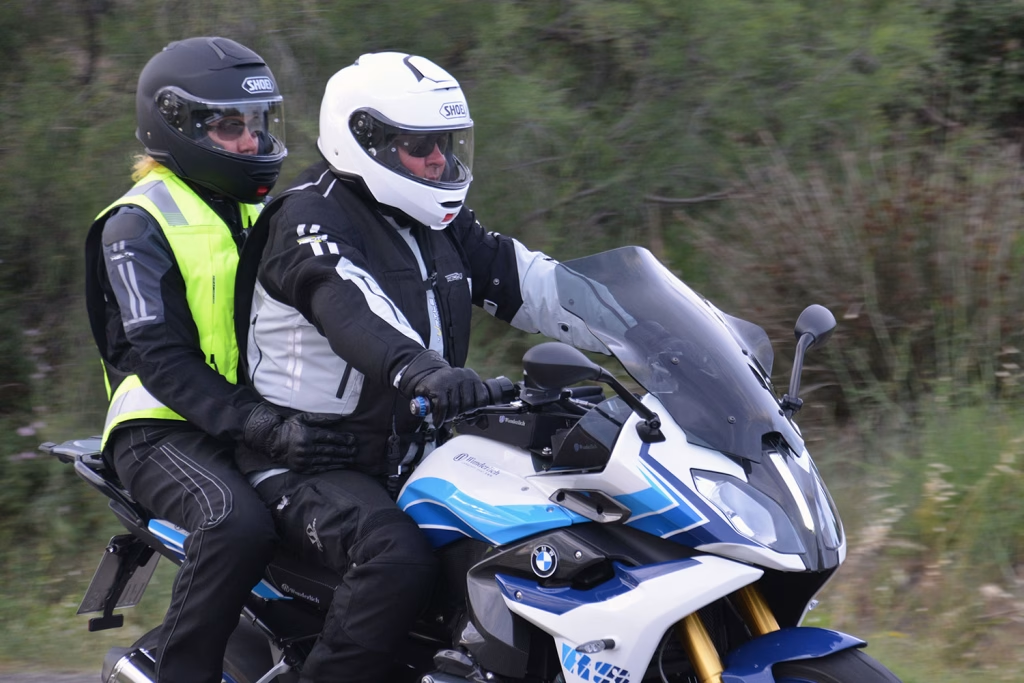 Whilst I have been checking out Helite’s mechanical airbag for comfort and practicality of wear, fortunately, I haven’t as yet been ejected from a bike, and neither do I want to be, thus there are no images of me with the vest inflated, although you will find plenty (not of me) on the Internet. However, the security factor lies in the knowledge that I am wearing an additional protective layer in the first place.
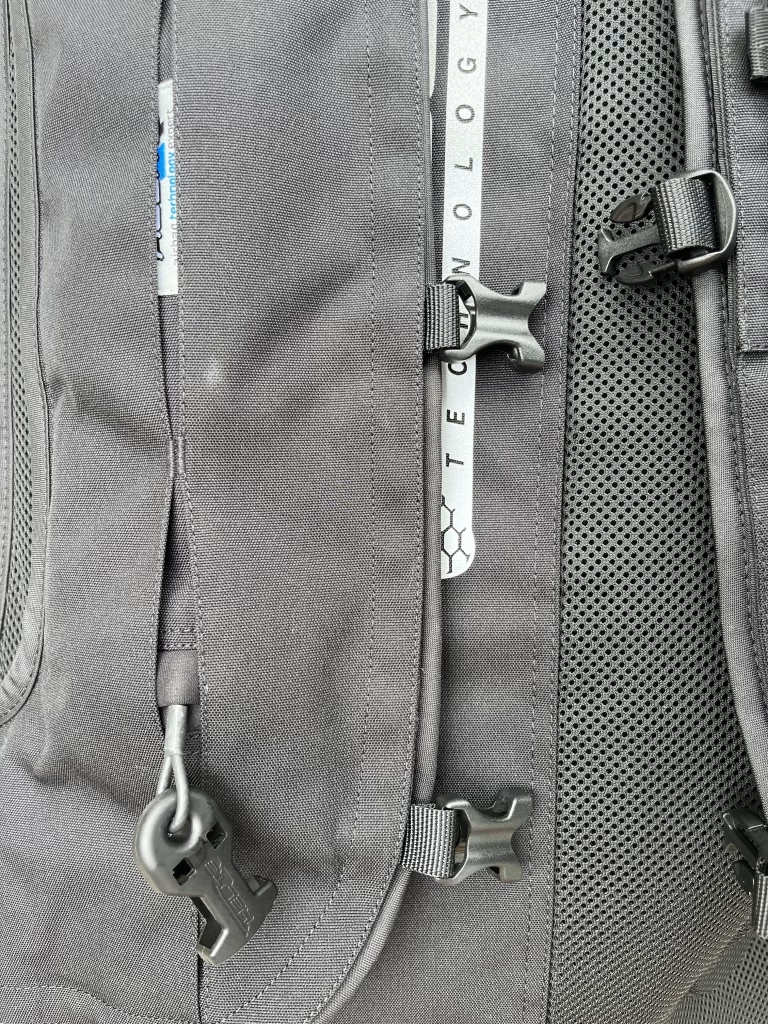
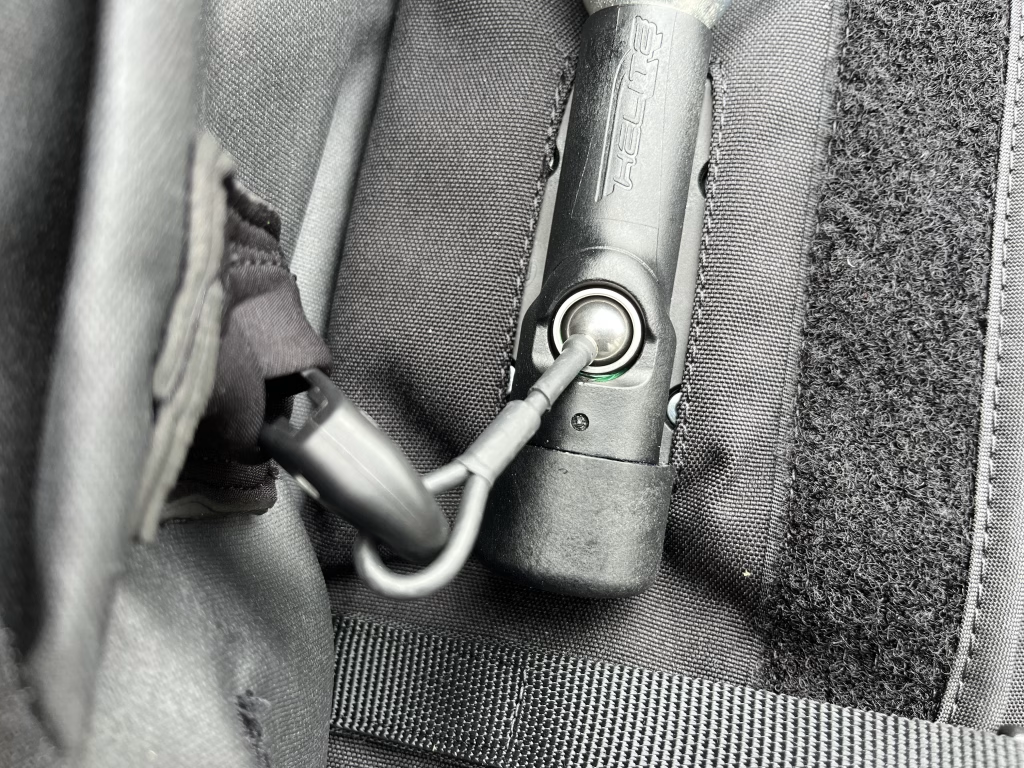
Fortunately for me, because I am a bit of a dunce when it comes to mechanics and electronics, the mechanical airbag system does not require any special technical knowledge or tools to install. It is simply a case of attaching the tether to the bike and clipping it to the airbag to activate the system… in this instance a gas cartridge that will automatically inflate the airbag in the event of an accident. Should that happen, as you are catapulted from the bike, the strap unhooks from the vest, causing the airbag to inflate in a fraction of a second (less than 0.094s) before impact, protecting all vital areas of the body, including the thorax, abdomen, neck, back and hip. Being, as I say, a bit of a technophobe, I opted to check out the mechanical airbag (not literally) rather than the electronic vest because you only need to change the compressed gas cartridge post deployment, a simple operation in itself that apparently can be done in under two minutes.
On a technical note, the Helite Turtle 2 Air Vest offers a SAS-TEC EN 1621 Level 2 back protector on the outside of the airbag with an inner textile 3D mesh to enhance airflow and comfort. This high-performance piece of CE-certified body armour has been designed to absorb impact energy and protect the spine during a spill. It is constructed of advanced 3D viscoelastic soft foam that is both flexible and lightweight, moulding comfortably to one’s body shape. EN 1621-2 is a European safety standard specifically for motorcycle back protectors, setting the benchmark for impact absorption.
Should you conduct your own research, no doubt you will come across the Helite Double Turtle Air Vest. Whilst it, too, can be worn over jackets, it has been designed to wrap extra airbag volume around the front, sternum and ribcage to mitigate severe blunt force trauma, whereas the Turtle 2 focuses primarily on a rigid back protector with standard torso coverage.
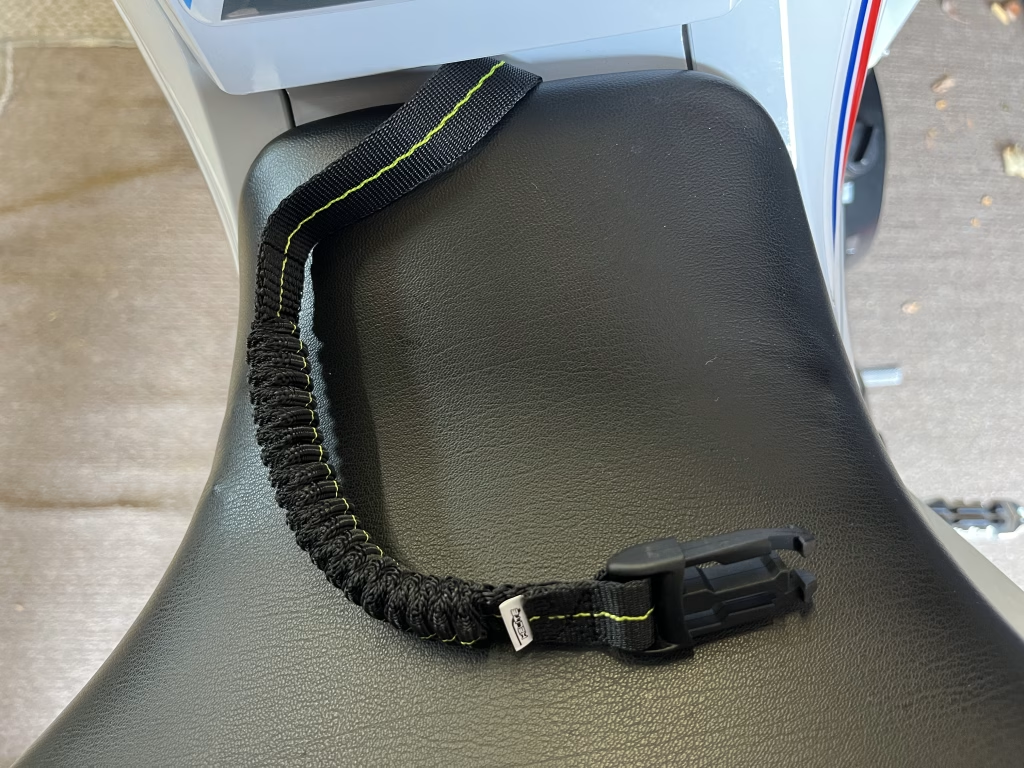
Having tethered the lanyard to a cross brace under the BMW’s seat, leaving the elasticated part dangling between the front of the seat and the tank, I donned the vest, adjusted the front fastenings for optimal fit, and climbed aboard.
Now, I imagine that some bikers will not purchase an airbag for the simple reason that they believe them to be too cumbersome, or perhaps to them, they are not trendy enough. Yes, I know, those people are out there. But then, what price do you place on safety? Well, rest assured that the Helite vest I have been wearing weighs just under 4lb, and that includes the integrated Level 2 back protector and CO2 cartridge. Admittedly, when first picking one up it can feel substantial, but bear in mind that once on the bike, the weight distributes evenly across the shoulders and often rests against the seat while riding, making it virtually unnoticeable in motion. For convenience, I have tended to remove the vest whilst walking around. So, yes, it is practical for daily use when worn over a motorcycle jacket. Another benefit is that you can remove the back protector from your chosen jacket as you are already comprehensively covered with the Helite.
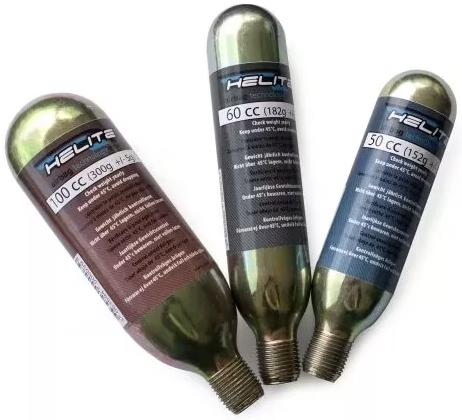
Whilst thinking about future rides, should you decide to splash out on a Turtle 2, it might also well be worth considering purchasing a second CO2 canister, as they are not reusable. Replacement, however, is simple. Priced between £22 and £25, Helite offer four sizes (50CC, 60CC, 85CC and 100CC), allowing for the provision of effective protection according to the airbag volume. Basically, the size of the canister is proportional to the size of the airbag.
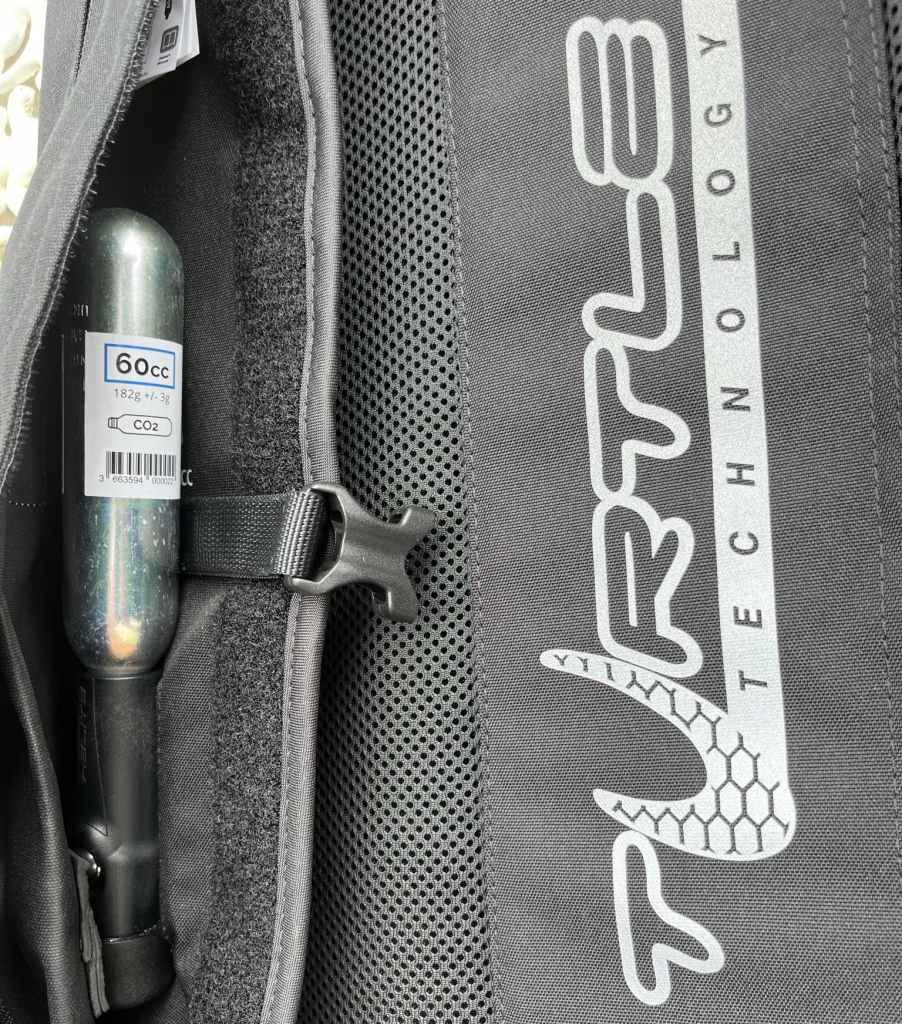
Before purchasing a second canister, Helite recommend that users unscrew and place the existing canister on a scale. Make sure it is approximately +/- 3g for 50CC and 60CC canisters or +/- 5g for 100CC canisters to the weight written on your canister (Helite sticker on the canister). Whilst it is an additional cost, it is well worth either keeping a second canister at home or carrying one on the bike that you can quickly replace in case of a tumble.
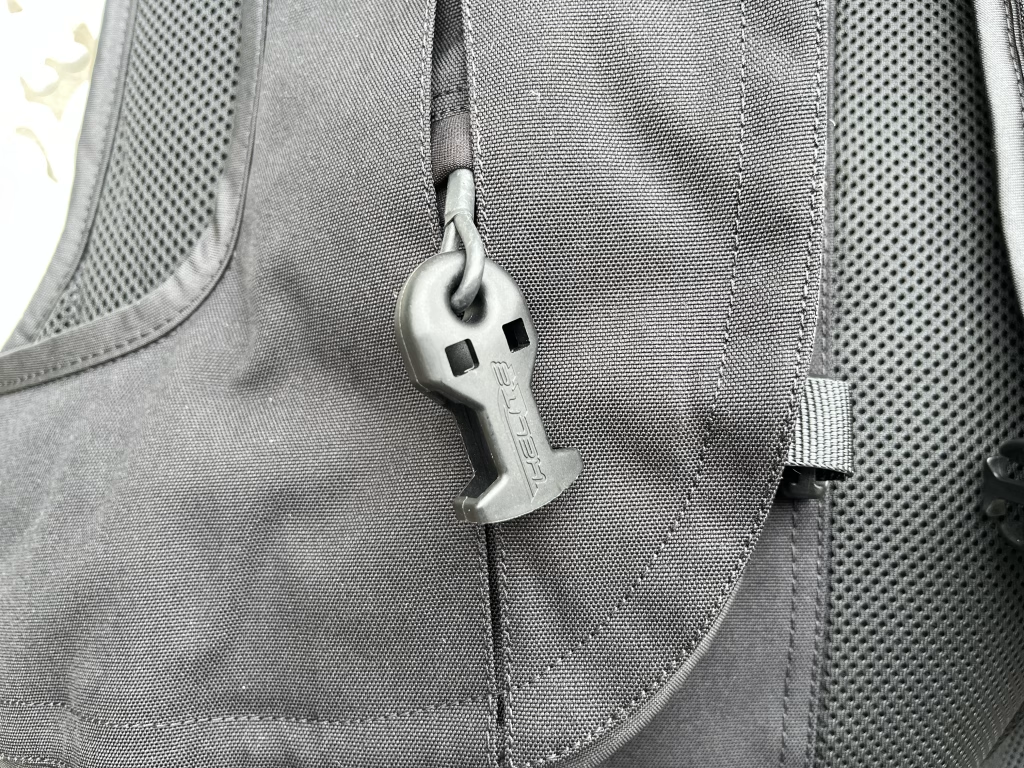
If you have several bikes, it is also well worth the extra outlay for an additional lanyard, as the vest is only supplied with the original. At a cost of £29.95, you can attach one to each bike (should you have two), leaving each lanyard securely attached so there is no faffing around. At this point it is worth mentioning the following, as it is important that you fit the lanyard correctly in the first place:
- Ideally, attach the lanyard under the seat around a robust tube of the frame – not to the handlebars
- Make a loop with the buckle at the most convenient location on the motorcycle
- The closer the lanyard is to your centre of gravity when seated on the vehicle, the better
- Try out the length and adjust it until you reach an optimal length
- The lanyard should only be tight when you stand up, so check that to get it right
- If the length of the strap is too long, the inflation of the airbag jacket could be delayed.
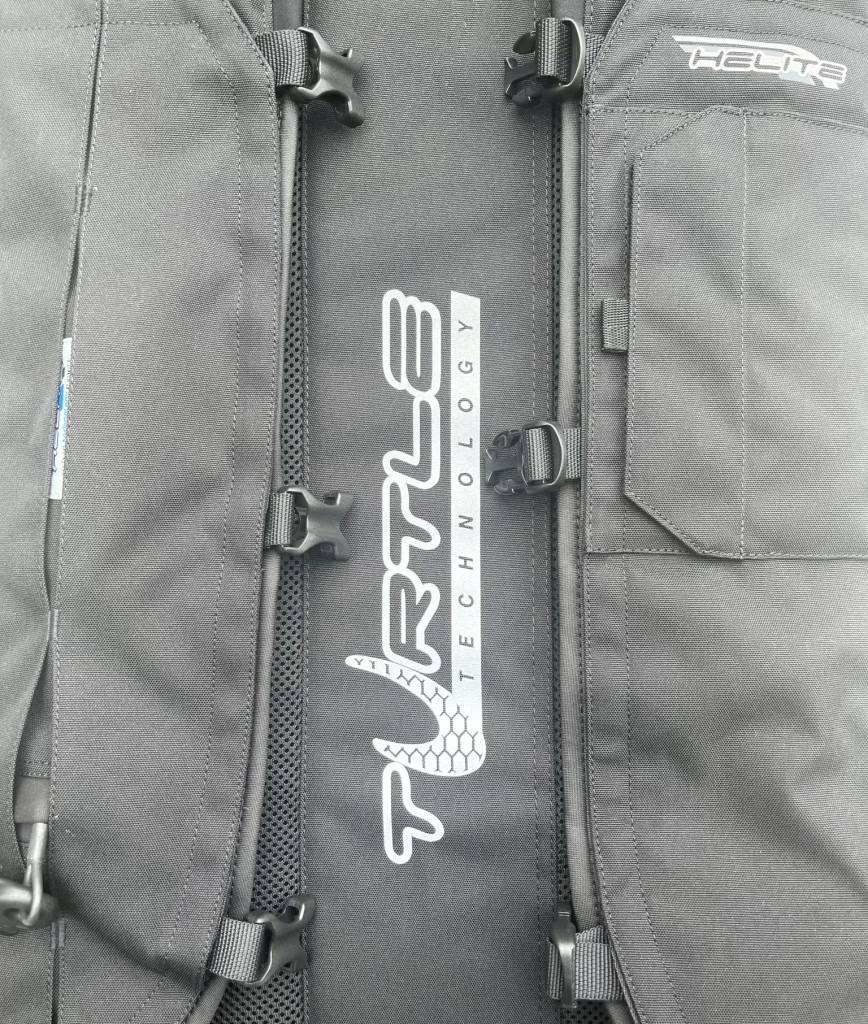
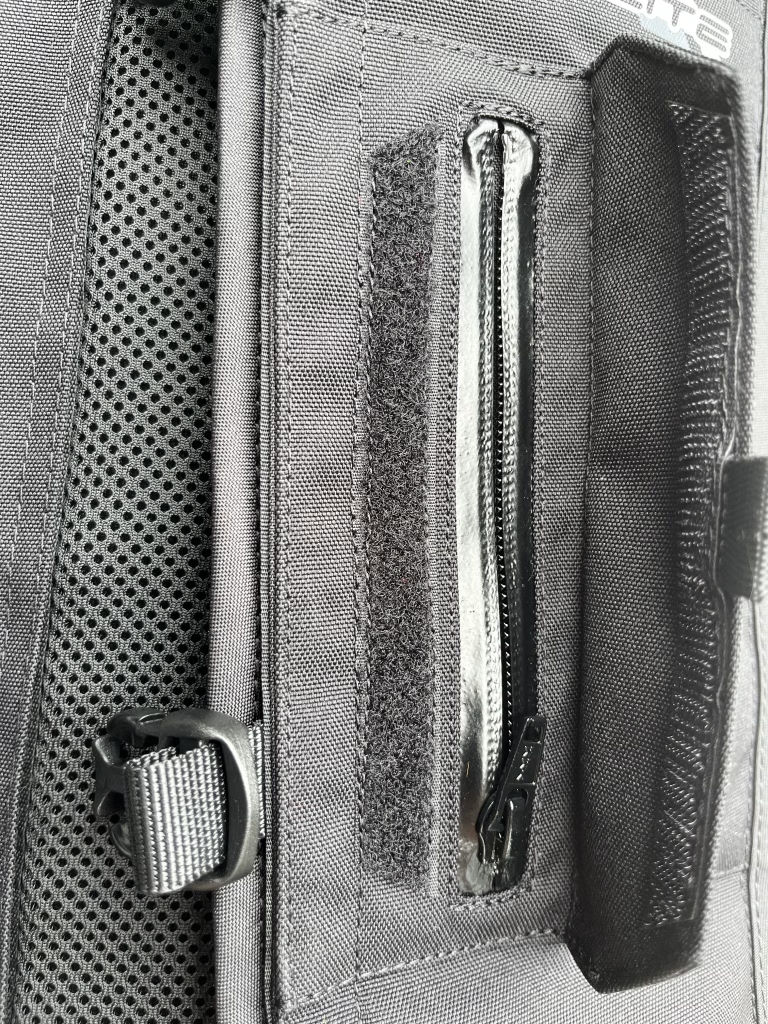
It is strange that a product that you might have never before considered, suddenly becomes a go-to item, as it can be worn over synthetics or leathers or adventure jackets. For adjustment, firstly I donned my motorcycle jacket (being summer and very warm, I have been wearing a Knox ventilated jacket). Having then put on the Helite, I located the large Velcro adjustment flap to the left side of the vest and opened it. To adjust the width, I used the three internal Velcro straps to tighten or loosen the vest to match my riding gear and find the best placement for comfort. That will prove an important factor as the seasons change and jackets get heavier. I remembered not to make the vest overly tight, as the airbag obviously needs room to expand outward during deployment. Before closing the pocket, I made sure I had allowed myself just enough space to comfortably fit my fist between the vest and the jacket. Then it was simply a case of securing the three central front clips, as obviously proper closure is required to maintain the vest’s structural integrity when inflated.
I watched a few videos on YouTube and other social media platforms to see exactly how the airbag inflated upon impact, and also how simple it was to replace the cartridge. Believe me, it is an eye-opener to see the vest inflate and might make your eyes pop (not literally) should it happen to you, it is that dastardly quick.
Now, I was going to use the word ‘boof’ as I thought it appropriate for that sudden inflation. You know… ‘BOOF…!’ Er, good job I checked, because apparently, it’s a slang term with several very different meanings depending on the context, and seeing as how we are all grown-ups here, that includes engaging in oral sex, or something that is whacky, shitty, dumb, or fucked up, and used to describe objects, people, or shit you don’t want to do. So, choose your own word with caution, because I can’t think of an appropriate one right at this moment…
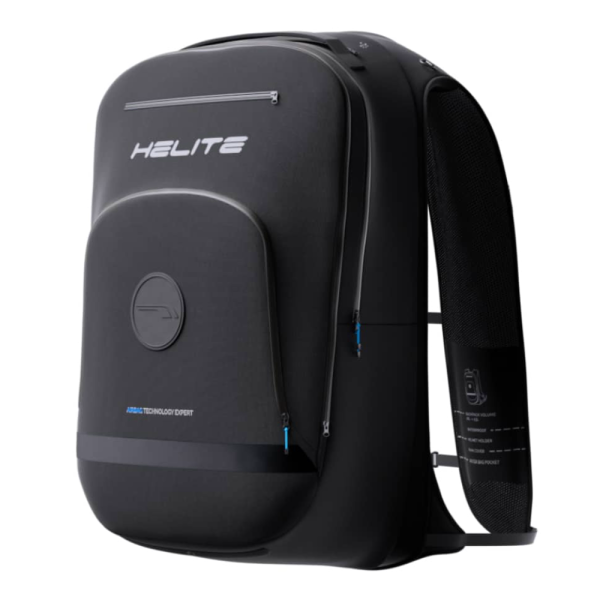
Check out the brand’s website as Helite offer an impressive range of products, including a rather nifty H-MOOV Airbag Backpack, the latest product in the airbag family. Combining Helite’s trusted Turtle 2 technology, the backpack features a drinking water bladder pouch, main, secondary and strap compartments to store everything for your trip, and a combined helmet bag and waterproof cover for the entire bag and your belongings. Available in both mechanical and electronically triggered variations, the price is £650-£755.
A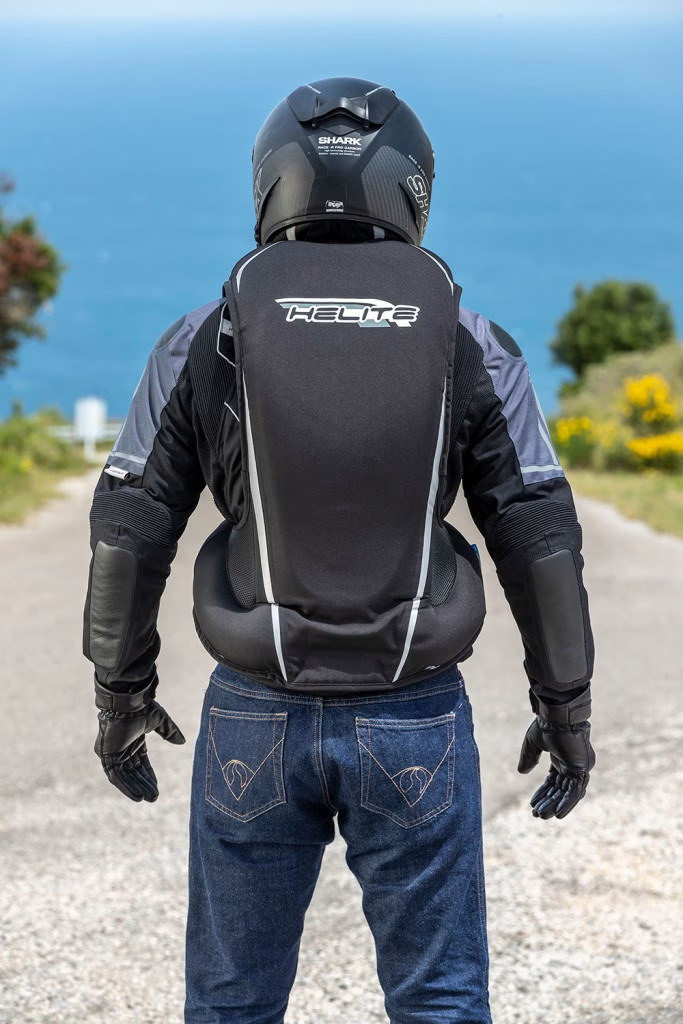 s you can gather, I do not, never have, and never intend to compromise on safety whilst riding. Life is too precious. Thinking about that incident with the van, and believe me, I try not to as I suffered PTSD and counselling after the event, whilst never wanting to encounter that scenario again, riding a motorbike is bloody dangerous, no matter how safe a rider you think you may be.
Prior to the accident I mentioned earlier, I had attended a BikeSafe course run by Lincolnshire Police, spent a day with Rapid Training, spent a track day at Donington with Bennetts, had joined the Lincolnshire Branch of the Institute of Advanced Motorcyclists and, as an Associate, was partway through my training. My instructor and I had gone through IPSCA (Information, Position, Speed, Gear, Acceleration), and that was flowing through my mind as I approached the bend. When later the Police came to visit me in hospital, they told me that, having gone through CCTV footage captured from an industrial unit, I had done nothing wrong in terms of my approach. But the accident still happened. In the blink of an eye. And that’s all it takes.
The Helite Turtle 2 Air Bag Vest retails at £550-£595 and is available in Black or Hi-Viz Yellow.